In many restaurants, supplier relationships are treated as purely transactional. Chefs, operators and managers place orders, compare prices, check invoices, and hope deliveries arrive complete and on time. As long as the truck shows up and the numbers look right, most operators consider the relationship good enough.
However, in today’s restaurant environment, having that type of mindset leaves money, opportunities, and stability on the table.
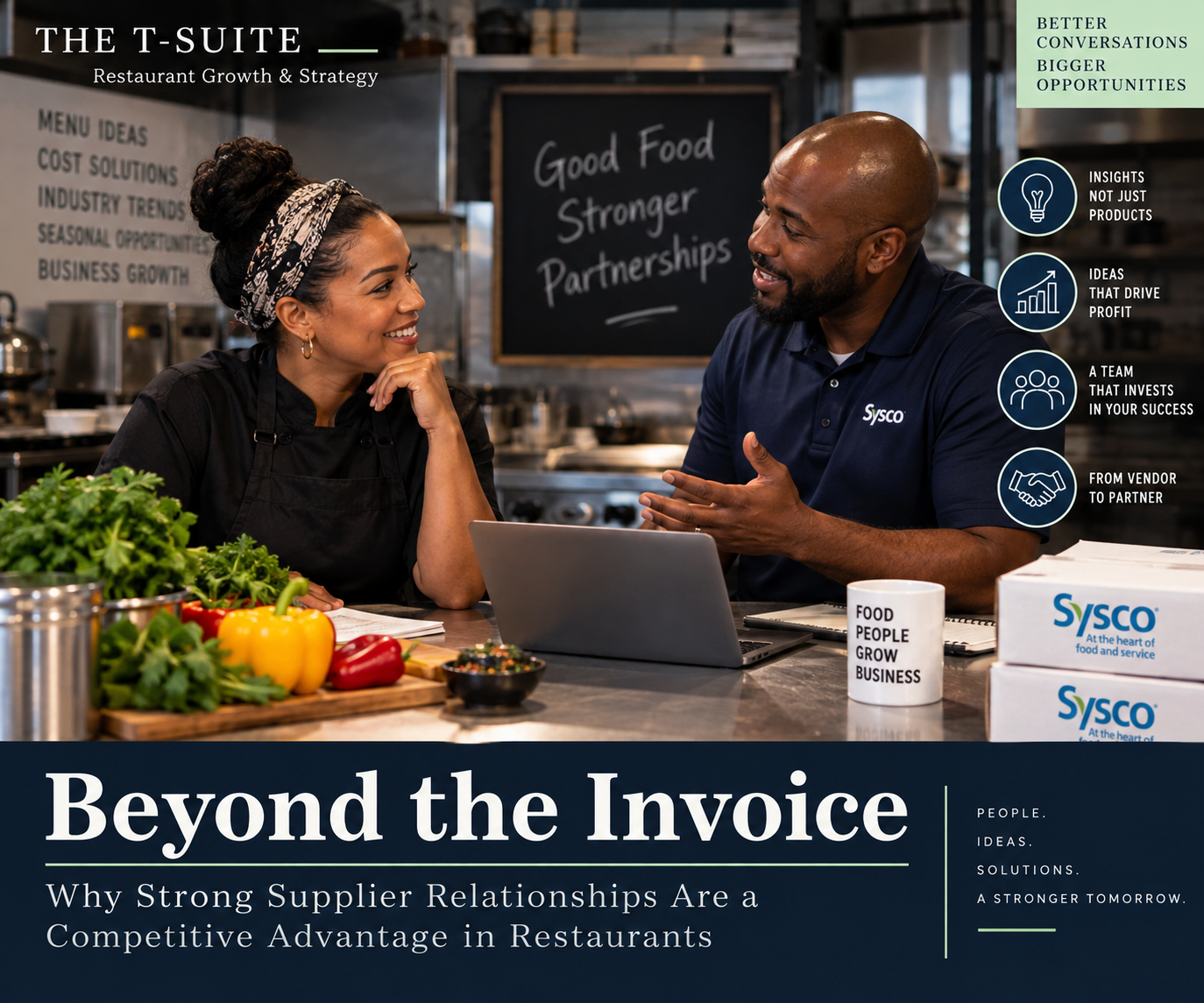
When margins are tight, product costs are not predictable, and consumer trends shift quickly. That means suppliers can no longer be viewed as just vendors. The strongest operators understand that food suppliers can be strategic partners. With strategic partners, more can be gained from that relationship such as valuable sources of insight, innovation, and even operational support. While average operators focus only on cost, top performers focus on partnership.
Today, that difference matters more than ever.
The Hidden Risk of Treating Suppliers as Transactional Vendors
At first glance, it seems logical to focus heavily on price, delivery accuracy, and order fulfillment. Those are most definitely essential parts of running a restaurant. But when that becomes the entire relationship, operators create unnecessary vulnerability and blindspots in their business.
A transactional approach has the potential to lead to inconsistent product quality during shortages, limited access to new or trending items, less flexibility during price volatility, and missed opportunities for menu innovation. It can also mean falling to the bottom of the priority list and totem pole when supply chains tighten.
In other words, operators who fail to build real and meaningful supplier relationships are often operating at a disadvantage without fully realizing it.
Many restaurant operators focus on cost alone, while stronger operators understand the long-term value of a strategic partnership.
Shift From Vendor to Partner Mindset
One of the first steps is changing the way you view your supplier consultant. Instead of seeing them as someone who simply takes orders, treat them like an extension of your business. A strong rep has visibility into product movement, category shifts, availability challenges, pricing trends, and what other operators are doing successfully in the market.
That kind of access is valuable.
Suppliers work with hundreds of restaurants across multiple segments. They track what’s selling, which concepts are gaining traction, ingredients that are in short supply, and where operators are finding opportunities to increase margins. Restaurant owners and operators who tap into that knowledge gain an advantage that goes far beyond the invoice.
Share your business goals with your suppliers. Let them know your margin targets, where you want your menu to go, and what kind of growth you are planning. When your supplier understands your priorities, they are in a much better position to bring meaningful recommendations and insights instead of generic product pitches.
Key Takeaway: Suppliers see hundreds of restaurants. Smart operators use that data.
Create a Consistent Communication Rhythm
Strong relationships are not built only when something goes wrong.
Too often, operators reach out to suppliers only when there is a shortage, a pricing complaint, or a delivery issue. That reactive communication style limits the relationship and keeps it stuck at a surface level.
Instead, create a regular rhythm. A short weekly or bi-weekly check-in can make a major difference. Use that time to review price changes, product availability, upcoming supply concerns, and new item opportunities. Those conversations create space for planning rather than scrambling at the last minute. Ever heard of the 6 P’s? The saying goes “Proper Prior Planning Prevents Poor Performance”. Essentially, having a planned roadmap creates seamless execution but on the other hand, no plan is almost a guarantee of confusion and panic.
Consistent communication also helps suppliers serve you better. When they know what your business needs ahead of time, they can often help you navigate changes before they become problems. That kind of visibility is especially important during seasonal shifts, periods of inflation, or menu rollouts.
Ultimately, the goal is to stay in dialogue, instead of just in damage control.
Leverage Suppliers for Menu Innovation
Menu innovation does not always have to start in your own kitchen.
Suppliers are often one of the best underused resources for fresh ideas. Because they work across many operators and categories, they have visibility into what is trending in flavors, formats, sauces, sides, proteins, and limited-time offers. They can often tell you what products are gaining traction before a trend becomes overly saturated.
Ask better questions. Instead of only asking what is on promotion, ask: “What are other operators doing right now?” or “What ingredients are moving the most?” These questions can open the door to limited-time offers, flavor extensions, and menu refreshes that feel timely without requiring a full overhaul.
This is especially useful when building limited time offers or testing trend-forward items. Whether it is global sauces, bold spice blends, shareable sides, or cross-cultural comfort food concepts, supplier input can help you move faster and test smarter. Dive deeper with this blog post about global flavor innovation and where the market seems to be trending toward.
This strategy also connects directly to the bigger conversation around menu evolution. Operators looking to stay relevant should not only watch trends—they should use their supplier network to act on them.
Use Data to Strengthen the Relationship
Supplier relationships get stronger when the conversation becomes more collaborative.
Do not keep all of your operational insights to yourself. Share what is selling and what is underperforming. Let suppliers know where your margin pressure exists and which menu categories need improvement. When you provide that visibility, the relationship becomes much more strategic.
That also opens the door to smarter conversations around portion optimization, product substitutions, bundle opportunities, and ways to improve plate cost without the risk of jeopardizing the guest experience. Sometimes a slightly different cut, pack size, or product format can improve yield, labor efficiency, or overall profitability.
A good supplier is not just there to sell more cases. The right partner can help you find more profitable ways to build your menu.
Become a Preferred Operator
It should be no surprise that every restaurant doesn’t receive the same level of attention from suppliers.
Operators who pay on time, communicate clearly, stay open to recommendations, and provide consistent business tend to build stronger trust over time. That trust often leads to stronger relationships and real business advantages.
Preferred operators may gain earlier access to short-supply items, better communication during disruptions, stronger service during busy periods, and more useful pricing guidance. That does not always mean getting the absolute lowest price, but it can mean getting smarter recommendations that help protect profitability.
When supply chains tighten, being easy to work with matters. Suppliers remember which operators are collaborative and which ones are difficult only when problems arise. In high pressure moments, those relationship dynamics can shape response time, flexibility, and support.
Turn Problems Into Trust-Building Moments
Mistakes are bound to happen. Shorts, mis-picks, delays, and substitutions are all a part of the business.
What matters is how those moments are handled.
Operators who treat every mistake as a battle often damage the relationship in ways that hurt them later. That does not mean accepting poor service, but it does mean approaching problems with a focus on solutions rather than blame. Clear communication, professionalism, and accountability create better outcomes than reactive frustration. Ever heard the saying “You can catch more flies with honey than vinegar”?
Some of the strongest supplier relationships are built during obstacles and challenging moments. When both sides work together to solve problems quickly and fairly, trust deepens. And in an industry where speed matters, strong relationships usually lead to faster resolutions.
Think Long-Term, Not Just Weekly Cost
It is easy to chase the lowest price. But the cheapest product is not always the best business decision.
A slightly lower cost item that creates inconsistency, poor yield, or a weaker guest experience can end up costing more over time. The smarter question is not always “What is the cheapest”, but “What protects the business best”?
That means considering product consistency, usable yield, labor impact, and the customer experience alongside cost. A strong supplier can help you evaluate all of those factors, not just the price per case.
The operators who win long term understand that their supply strategy affects more than food cost. It affects execution, menu performance, guest satisfaction, and overall brand consistency.
Final Thoughts
The most successful restaurant operators do not just manage food costs. They build ecosystems around their business.
Your supplier is not just delivering products. The right supplier relationship can deliver market intelligence, operational support, and a real competitive advantage. In an industry where margins are under pressure and trends move fast, that kind of partnership matters.
The operators who stay ahead are not the ones who only negotiate harder. They are the ones who build smarter. They ask better tactical questions, communicate consistently, collaborate with intention, and use supplier relationships as part of their growth strategy.
In today’s restaurant business, one of your most undervalued assets may not be on your menu at all. It may be the partner helping you build it.